
The Proven Antidote That Can’t Be Proven to Work
Hydroxocobalamin neutralizes cyanide, and critically ill house fire victims inhale cyanide with the smoke. So why can’t we demonstrate that it helps them?
By Matt Bivens, MD

A Medical Mystery: The Proven Antidote That Can’t Be Proven to Work
When a critically ill patient is extricated from a fire, we often assume they have inhaled poisonous gases, including carbon monoxide (CO) and hydrogen cyanide (HCN). So, in addition to providing oxygen and supportive care, we often treat with an enormous intravenous dose of vitamin B12, which we hope will justify its $1,000 price tag by soaking up any circulating cyanide.
The evidence for this practice is not only compelling but also entirely circumstantial. We have good evidence that intravenous hydroxocobalamin can neutralize a cyanide poisoning.¹ We also know that burning plastics and polymers, the kinds that vaporize in a hot structure or vehicle fire, can generate HCN gas.²,³ And we know that patients trapped inside burning buildings or vehicles, and also many firefighters, can demonstrate toxic levels of cyanide in their blood.⁴⁻⁷
All we lack is any evidence that hydroxocobalamin treatments are helping critically ill smoke-inhalation patients.
Hydroxocobalamin is just a formulation of vitamin B12, but the doses used in suspected cyanide poisoning are staggeringly huge. Vitamin B12 supplementation is dosed in micrograms; the 5 g cyanide antidote dose is thousands of times larger. When a paramedic reconstitutes dark red hydroxocobalamin powder in normal saline and injects it, the vein used often turns red as the medicine flows in.⁸
Blood pressure will often spike. Urine and skin can turn bright red, and may stay red for days, even weeks (Figure 1).⁹ Lab values obtained with colorimetric analyzers, including, inconveniently, tests for carboxyhemoglobin,¹⁰ can be unreliable.
We have accepted all of that, and even new reports of a danger to the kidneys,¹¹,¹² under the assumption that the patient has active cyanide circulating that needs neutralizing. But now, we are also seeing a predictable indication creep, which has paramedics giving $1,000 vitamin shots not just to the critically ill, but to alert, stable patients who are coughing after a house fire “because cyanide.”¹³
I find myself sympathetic to a 2022 paper in the journal Burns titled, “Say no to Cyanokit®. Pause at the 10, 10 threshold.”¹⁴ The tens referred to here are a carboxyhemoglobin level of at least 10%, and a lactate of 10 mmol/L, each of which is a sensitive surrogate for a significant cyanide poisoning. We could reserve hydroxocobalamin for smoke-inhalation patients with altered mental status and at least one of those possible point-of-care test values, probably the carboxyhemoglobin level, because this can be obtained by most fire services in a few seconds if they are armed with a CO-oximeter finger probe device.

The Procedural Lifelines Video Blog
Rapid EM Procedural Videos You Need
When you know the procedure but need a quick review, Procedural LifeLines has timely, emergency medicine videos for you, all in under five minutes.
Alex Koo, MD, Munish Goyal, MD, and Ryan Walsh, MD, boil down procedures into practical and immediately applicable information for the bedside.
Read their blog and watch these videos today!
This month’s episode: Peritonsillar Abscess Drainage in the Emergency Department (with Jason Lesnick, MD)
Cyanide in Fire Smoke
Here in New England, cyanide in fire smoke was first widely discussed after a catastrophic Rhode Island nightclub fire in 2003. It was one of the worst incendiary disasters in modern American memory, arguably second only to the September 11, 2001 terrorist attacks.
The Station Nightclub had no sprinkler system, and its walls were sound-proofed with a polyurethane foam. The club was jammed with more than 400 people when a fireworks display ignited the foam insulation. Fire spread with terrible rapidity. Of the 100 people who died, almost all did so immediately.
The first responders and doctors managing the crisis did not report considering cyanide poisoning.¹⁵⁻¹⁷ But later, a federal agency built mockups of the night club, reenacted the fire, and reported that lethal cyanide levels were generated in 75 seconds, and lethal CO levels in 92 seconds.¹⁸
Sobering reports about those reenactments came just as EMD Pharmaceuticals (now EMD Serono) was orchestrating a marketing campaign to warn of cyanide in fire smoke, and to offer hydroxocobalamin as a solution.
In 2004, EMD published a 29-page editorial supplement in JEMS called “Smoke Inhalation & Hydrogen Cyanide Poisoning” (full supplement available via link below).¹⁹ To an audience of paramedics and EMS medical directors, the supplement talked up the coming of a safe, empiric antidote for smoke inhalation that had been used for decades in Europe. Cyanokit® was FDA-approved in 2006, and that same year, EMD hired the public relations company, Biosector2, to set up a non-profit to spread the word about this underappreciated danger. The company announced the creation of a Cyanide Poisoning Treatment Coalition (CPTC) in a press release.²⁰ (See sidebar interview.)
Later, on a website aimed at future clients (no longer available online, but see screenshot taken some years ago), it proudly described this work: “When a client needed help launching the first product for a condition no one knew about (ie, cyanide in fire smoke), B2 engaged those on the frontlines,” the company said. “Through the formation of a multidisciplinary coalition to raise awareness about smoke inhalation and treatment, B2 helped the buzz spread like wildfire” (Figure 2).
The CPTC, armed with a $400,000 grant from EMD, was soon tracking smoke-inhalation patients treated with hydroxocobalamin (Figure 3). “Another Cyanokit® save!” their newsletter would announce. The buzz was indeed spreading.
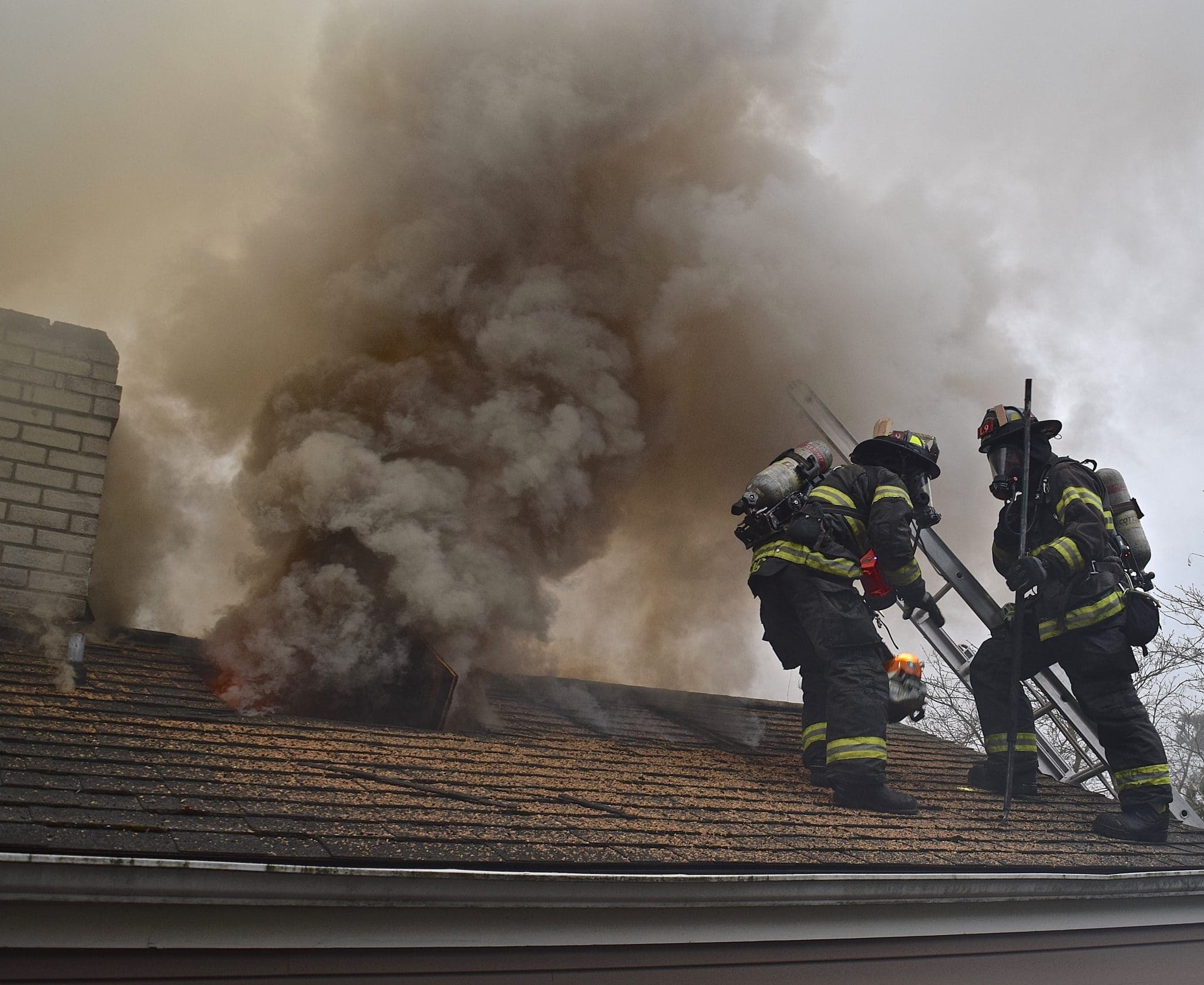
In 2006, the same year the CPTC was created and the Cyanokit® was approved, multiple Rhode Island firefighters at the scene of a plastics-heavy fire in Providence reported headaches, nausea, and dyspnea, and one had a heart attack. The Station Nightclub fire was a recent, raw memory in Rhode Island, and so blood cyanide levels were sent out for testing. Nine of 28 firefighters were eventually found to have had elevated cyanide levels. An investigation commissioned by the fire department noted that, given cyanide’s one-hour half-life, peak levels were likely higher.⁵
Studies since have only confirmed that cyanide is a relevant danger in smoke inhalation. A 2017 review of 53 postmortem smoke-inhalation cases from either vehicle or structure fires in Germany found nearly half had “toxic” levels of cyanide in their blood, and 13% had “lethal” levels.⁷

Hydroxocobalamin Convincingly Neutralizes Cyanide
The body creates some cyanide on its own, and it can easily neutralize small amounts. There is cyanide in cigarette smoke, for example, which the body manages in many ways. One line of defense is an enzyme called rhodanese, which attaches sulfur to cyanide, turning it into harmless thiocyanate that can be excreted in urine. (An alternative antidote for cyanide poisoning has thus long been sodium thiosulfate, which supplies more sulfur to keep rhodanese busy.²¹)
Another line of defense is the active B12 (also known as hydroxocobalamin) circulating in blood. This can also bind cyanide, which is no doubt why cigarette smokers have much lower levels of hydroxylated B12 than non-smokers.²² (Meanwhile, cannabis smoke contains three to five times more cyanide than cigarette smoke!²³)
Cyanide that evades or overwhelms those various defenses can enter mitochondria and cripple a cell’s ability to use oxygen. Anaerobic energy pathways are called upon, lactic acidosis levels soar past 8-10 mmol/L, and patients can die within minutes. (Carbon monoxide, which almost always comes in tandem with cyanide in smoke-inhalation cases, also interferes with mitochondrial oxygenation, but is more infamous for binding hemoglobin to hinder its oxygen-carrying ability.)
Hydroxocobalamin has been known since the 1950s as a treatment for cyanide poisoning.²⁴ Over the decades, it has been tested in mice, rabbits, dogs, and in healthy volunteers, and in these unavoidably small studies, it seemed safe and efficacious.
It was certainly safer than some other options. The sodium thiosulfate mentioned above was one thing; it was just a sulfur donor to help the rhodanese detoxification pathway. But it was also felt to work too slowly, so it was usually accompanied with nitrites (amyl nitrite and sodium nitrite).
The nitrites were intended to damage hemoglobin, methylating it into methemoglobin that, one hoped, would bind and neutralize cyanide. (Poisoning a critically ill patient’s red cells to turn them into a sponge for another poison always seemed a terrifying idea.)
Hydroxocobalamin was thus ready to be embraced with relief. Two studies in particular were highlighted by EMD’s 2006 application for FDA approval²⁵ of its use in America.
The first study, funded by EMD Pharmaceuticals, involved 54 anesthetized, intubated, and cyanide-poisoned beagles. All 18 beagles who received high-dose hydroxocobalamin (the authors say equivalent to 10 g for a human) recovered. Nearly all of the placebo-treated beagles (14 of 17) died. A goldilocks group treated with standard-dose hydroxocobalamin, the equivalent of 5 g for a human, also did well. Fifteen out of 19, or 81%, recovered.¹
The second study, also funded by EMD Pharmaceuticals, looked at 14 patients in a French ICU treated with hydroxocobalamin after they had ingested cyanide in suicide attempts. Most survived to good neurological outcomes. Even among the 10 patients with cyanide levels well above a lethal threshold of 100 mmol/L, seven survived.²⁶
One can see why there was enthusiasm for this. We have a new medication. It cures cyanide poisoning. It seems as safe as, well, vitamins. What’s not to like? EMN
Interview with Shawn Longerich
Executive at the Firefighter Air Coalition (FAC) and the Former Head of the CPTC
By Matthew Bivens, MD
Perhaps the real takeaway from 20-plus years of occasional science and never-ending marketing is that smoke is a danger to be avoided. From the dust clouds of 9/11 to the military’s waste burn pits in foreign wars, to tens of thousands of fire scenes each year across the United States, it’s been shown over and over that even a brief exposure to strange gases and fine particulate matter at such events can be life-wrecking.
In that regard, tracing the history of the Cyanide Poisoning Treatment Coalition (CPTC) is enlightening and even a little heartening.
The CPTC was a 501c3 non-profit, created by a pharmaceutical company marketing campaign, clearly to help with hydroxocobalamin sales. But over the years, it evolved. It moved away from flogging Cyanokit® and towards educating firefighters. It renamed itself the Fire Smoke Coalition. It butted heads with various pharmaceutical companies, eventually stopped taking pharma money entirely, and today operates as the Firefighter Air Coalition.
“We made it a bigger mission,” said Shawn Longerich, an executive at the FAC and the former head of the CPTC.
“It started as the CPTC and that was when Merck had entered into a distribution agreement with a pharmaceutical company [EMD Pharmaceuticals] for hydroxocobalamin,” Longerich recounted in an interview. “But they [Merck/EMD] put the cart before the horse because they started marketing a product before anyone knew anythingDAG anything was wrong (ie, before the dangers inherent in fire smoke had been broadly shown). We had to stop the bus and teach firefighters, and the world, that smoke was dangerous.”
“We did it scientifically. We started using atmospheric monitoring to show [firefighters] they were being exposed to hydrogen cyanide and carbon monoxide. We put the monitors in their hands. We didn’t say, ‘Use hydroxocobalamin.’ We said, ‘There are treatments for cyanide poisoning from smoke inhalation,’ and let them look into it themselves.”
“That [educating about the dangers of smoke] was something we were much more comfortable with [than marketing a given drug]. We have to be cognizant of smoke inhalation dangers.”
The CPTC started in 2006 with $400,000 in funding from EMD Pharmaceuticals, Germany-based Merck’s US distributor for Cyanokit®. In 2010, it also received a $394,000 grant from the U.S. Department of Homeland Security, to help educate firefighters about the dangers inherent in fire smoke. By 2011, Merck had a new US distributor, Meridian, a Pfizer affiliate.
Longerich said Meridian/Pfizer was unhappy with the CPTC’s lack of specific enthusiasm for Cyanokit®. The CPTC’s educational programs always mentioned all cyanide antidotes, including options like sodium thiosulfate and nitrites. Longerich said the Meridian/Pfizer marketing departments also wanted them to focus on markets in New York and Chicago, in hopes of getting large hospital systems to help stock up on Cyanokit®.
“We had gotten to a point where we were out there teaching, doing programs, we would train 14,000 to 15,000 fire fighters in a year. And then the message came down from Pfizer that they needed to see our presentations,” Longerich recalled.
That was a non-starter.
“They wanted to try to control what we presented, and so we separated from them. We pushed ourselves away from the pharmas.”