Smoke Inhalation & Pre-Hospital Treatment
Cyanide and Carbon Monoxide: The Toxic Twins of Smoke Inhalation

Recognizing Signs & Symptoms
By Daniel J. O’Brien, MD, FACEP, James Augustine, MD, FACEP, and Donald W. Walsh, PhD, EMT-P
This article covers the toxic composition of smoke, means of improving firefighting operations to reduce smoke toxicity, and the need for effective interventions to reduce smoke-related toxicity. This article describes the signs and symptoms of cyanide exposure and discusses the importance of a comprehensive smoke inhalation assessment and treatment protocol for improving outcomes in smoke-associated cyanide poisoning.
Both civilians and firefighters die as a result of inhalation of products of combustion from fire. Cyanide is one of the products of combustion that will contribute significantly to inhalation injury and death. Hydrogen cyanide, a toxic product of combustion of common nitrogen and carbon-containing substances, is likely to be generated under the conditions of high temperature and low oxygen that characterize closed-space structure fires.
Research on victims of smoke inhalation indicates that cyanide poisoning may be an important agent of death, particularly for victims in closed-space fires. For example, studies that simulated the nightclub fire in Rhode Island found rapid buildup of heat, carbon monoxide and cyanide to levels incompatible with survival. Cyanide poisoning can be treated effectively if it is recognized promptly and if intervention is initiated immediately. In this context, it is important that pre-hospital providers recognize the signs and symptoms of cyanide poisoning and have smoke inhalation evaluation and treatment protocols in place.
Cyanide Toxicity
Cyanide causes human toxicity by deactivating the mechanisms that allow cells to utilize oxygen. Because cyanide-poisoned cells are unable to use oxygen, they transition from aerobic metabolism to anaerobic metabolism and generate toxic by-products, such as lactic acid.
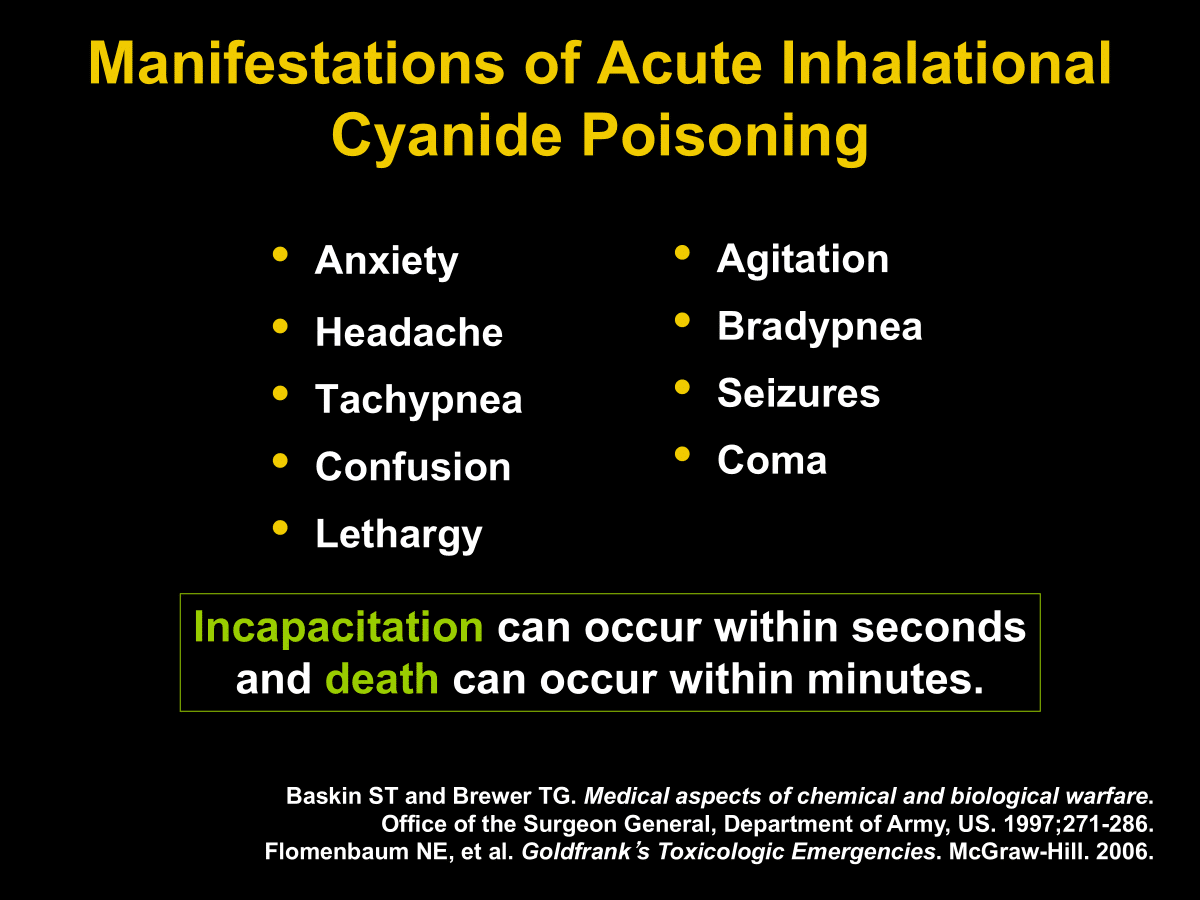
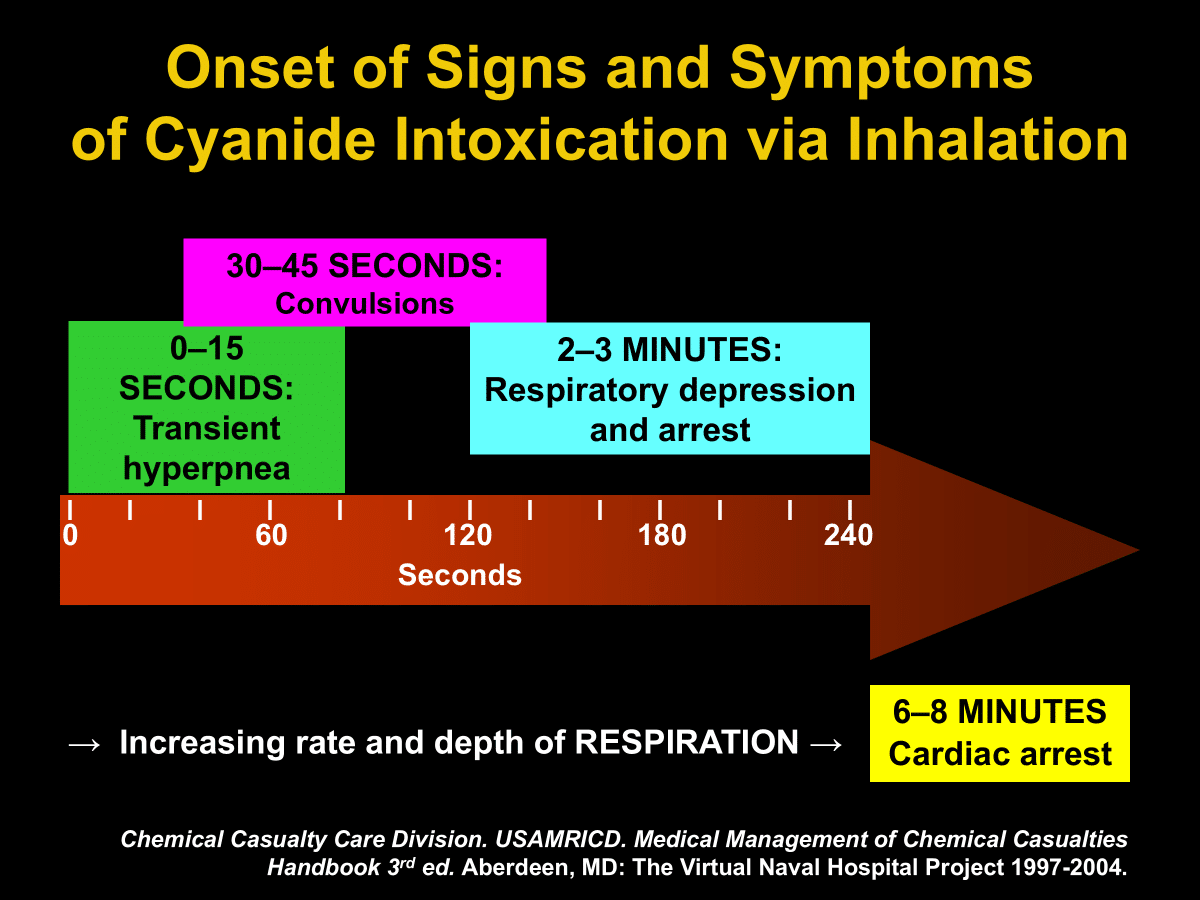
Organs such as the heart and brain, which rely on a substantial, continuous supply of oxygen, are quickly affected by cyanide poisoning. Exposure to smaller concentrations can initially cause respiratory activation (manifested by rapid breathing and tachycardia) in an attempt to compensate for lack of oxygen.
Early manifestations include headache, anxiety, blurry vision, and loss of judgment. As cyanide accumulates further, signs and symptoms of poisoning reflect the effects of oxygen deprivation on the heart and brain. These include cardiac dysrhythmias, seizure, coma, and death.
The time between exposure and incapacitation or death is typically minutes, but varies depending on the concentration of cyanide and other toxicants. Many toxicants affect oxygen utilization. The presence of multiple toxicants in fire smoke can be particularly hazardous.
Recognizing Acute Cyanide Poisoning
Currently, there is no diagnostic test to confirm cyanide poisoning within the limited window for initiating potentially lifesaving intervention. Transcutaneous monitors, such as those used to detect carbon monoxide poisoning, might someday be available to quantify the level of cyanide attached to hemoglobin; however, such an assessment tool is not currently available.
Therefore, in the pre-hospital setting, acute cyanide poisoning must be diagnosed presumptively.
Cyanide poisoning should be suspected in any person exposed to smoke in a closed-space fire. The simultaneous presence of hypotension increases confidence in the diagnosis of cyanide poisoning. A few cyanide-poisoned victims have a pinkish to cherry-red complexion caused by the (abnormal) high oxygenation of venous blood.
The victim’s breath may have an almond-like odor attributed to excretion of small amounts of cyanide in the breath. However, many people cannot smell this odor, sometimes resulting in the failure of the pre-hospital provider to accurately diagnose cyanide poisoning.
At most hospitals, rapid measurements of cyanide are not available. Assessment and treatment rely primarily on clinical judgment. Hospital laboratory findings that may indicate a strong possibility of cyanide poisoning include:
- Metabolic acidosis
- Elevated plasma lactate concentrations caused by the accumulation of lactic acid, a by-product of anaerobic metabolism
- Elevated oxygen content of venous blood, caused by failure of cyanide-poisoned cells to extract oxygen from arterial blood
- Carbon monoxide by blood tests or use of the transcutaneous monitor that is inconsistent with clinical symptoms.
It can be difficult to differentiate the effects of cyanide and carbon monoxide poisoning. The classic symptoms of poisoning with each agent are outlined in Tables 1 and 2. They are very similar. Detection of carbon monoxide poisoning can be achieved with the transcutaneous carbon monoxide oximeter (CO-oximeter).
The assessment for cyanide poisoning in the smoke inhalation victim remains a matter of clinical assessment by the astute emergency provider.

Transportation Considerations
Some communities have hospitals equipped to manage burn patients and/or provide hyperbaric oxygen treatment. In those communities, local medical control protocols typically prescribe the transportation of victims with burns and those with suspected carbon monoxide poisoning.
The American Burn Association recommends, in part, that partial-thickness and full-thickness burns greater than 10 percent of the total body surface area in patients under 10 years old or over 50 should be transported to a burn center. Partial-thickness burns greater than 20 percent of the total body surface area in other age groups, and full-thickness burns greater than 5 percent of the total body surface area in any age group, or an inhalation injury, ideally should be transported to an adult or pediatric burn center.
In communities that have multiple hospitals with different capabilities, EMS providers should preferentially transport smoke inhalation patients to those emergency departments that are prepared and equipped to manage burns, carbon monoxide inhalation, and cyanide poisoning.
When in doubt, on-line medical control should be contacted and assistance requested in determining the correct destination hospital.


Protocols for Pre-Hospital Assessment and Treatment of the Smoke Inhalation Victim
Smoke-associated poisoning with cyanide and other toxicants can rapidly culminate in death. To ensure that smoke inhalation victims are appropriately evaluated and intervention is promptly provided, it is essential to have protocols in place for pre-hospital assessment and treatment of victims of smoke inhalation. The following sample protocol can be adapted to department- or facility-specific needs and capabilities:
Indications
The protocol applies to the patient who has been trapped or rescued from a closed-space structure fire. The presence of soot in the nose and/or mouth in the unconscious patient may be a strong indicator of cyanide poisoning. The protocol applies regardless of whether a concurrent injury or burn is present. Smoke inhalation can be a dangerous medical condition requiring prompt evaluation and treatment!
Patient Evaluation
The patient should be moved to an area safe for assessment and clinical management. Key elements of the evaluation include:
- Mental status
- Any concurrent burn
- Any concurrent severe or critical injury
- Degree of respiratory distress
- Ability to oxygenate
The patient’s airway, breathing and mental status are evaluated as part of the primary assessment. Compromise of any of these elements makes the patient a “red category” triage victim and makes rapid treatment a priority. The patient requires support of airway, breathing and supplemental oxygen. The patient that has a sustained burn injury or other severe or critical traumatic injury should be given treatment specific to those medical presentations. In addition, a smoke inhalation treatment protocol should be initiated.
A pulse oximeter reading can assist in the evaluation of the patient’s overall ability to oxygenate and perfuse the body with oxygen. In the presence of carbon monoxide exposure, the pulse oximeter alone may produce an incorrect reading as the device does not assess the percent of hemoglobin affected by carbon monoxide. A reading below 90 percent reflects ineffective breathing, direct injury to the airway or lungs, or severe underlying lung disease (or some combination of these elements). When available, the carbon monoxide oximeter detects the level of carbon monoxide attached to the victim’s hemoglobin. A detector reading exceeding 12 percent reflects moderate carbon monoxide inhalation, and one exceeding 25 percent reflects severe inhalation. Smoke and other toxic products cause direct irritation of the airway and lungs, and treatment should reduce this irritation. Any injury to the airway or lungs causes impaired ability to oxygenate and ventilate, and treatment should supplement oxygen delivery, protect the airway, and facilitate exhalation of toxins.
CYANIDE POISONING
Early Indications of Exposure to Low Inhaled Concentrations
- Anxiety
- Drowsiness
- Dyspnea
- Headache
- Impaired judgement
- Tachycardia
- Tachypnea
- Vertigo
Inhalation of Moderate to High Concentrations
- Cardiovascular collapse
- Cardiac dysrhythmia
- Hypotension
- Markedly altered level of consciousness
- Respiratory depression or arrest
- Seizure
- Smell of almonds on the breath
CARBON MONOXIDE POISONING
Early Indications of Exposure to Low Inhaled Concentrations
- Difficulty with balance
- Fatigue
- Headache
- Palpitations
Inhalation of Moderate to High Concentrations
- Altered level of consciousness
- Cardiac dysrhythmia
- Nausea and vomiting
- Respiratory arrest
- Seizure
- Severe headache
- Shock and death
- Syncope
Emergency Treatment and Transportation
- Perform a primary survey to evaluate airway, breathing, mental status, and the presence of burns or other injuries. If possible, obtain a patient history of any underlying heart or lung problems.
- Evaluate the patient’s oxygenation by pulse oximeter and listen to the lungs for any abnormal sounds, particularly wheezing. When available, obtain a CO-oximetry reading. Victims with carbon monoxide levels exceeding 25 percent should be preferentially transported to the appropriate receiving hospital.
- Evaluate for potential cyanide toxicity. The patient should be evaluated for the presence of soot in the nose or mouth and/or an altered mental status, hypotension or shock, flushed skin, and seizures. These patients may be candidates for treatment with a cyanide antidote. Contact on-line medical control, if needed.
- Treat any burn or traumatic injury. The spine should be immobilized if indicated. If there is no indication for immobilization, allow the victim to find his/her position of comfort. Significant inhalation will cause violent coughing and at times vomiting, so the victim should be placed in a protective position or in a position of comfort.
- If the airway is compromised, the patient should undergo endotracheal intubation. If unsuccessful, a rescue device can be utilized.
- Provide supplemental oxygen. Most victims with an inhalation injury do not tolerate dry oxygen; therefore, the oxygen line should have a nebulizer attached with a full container of saline as soon as possible. If mental status permits, allow the patient to self-administer the oxygen by holding the mask and sitting in a position of comfort.
- If any wheezing is present on the lung evaluation or if the patient has a history of asthma or wheezing, administer nebulized Albuterol. The nebulizer should contain 2.5mg in
-

View InfographicREADY Check Poster
-

Read ArticleROAM Power Point
-
Watch VideoThe AFTERMATH Smoke Inhalation Video
-
Watch VideoCharleston Sofa Super Store Video
-
Watch VideoBobby Halton Coppell TX Video
-
Watch VideoMike McEvoy – Implementing Hydroxocobalamin Video
-
Watch VideoDr. David Persse – Implementing Hydroxocobalamin Video