Big-Box Structures and Fire Protection
What is a Big Box Store?
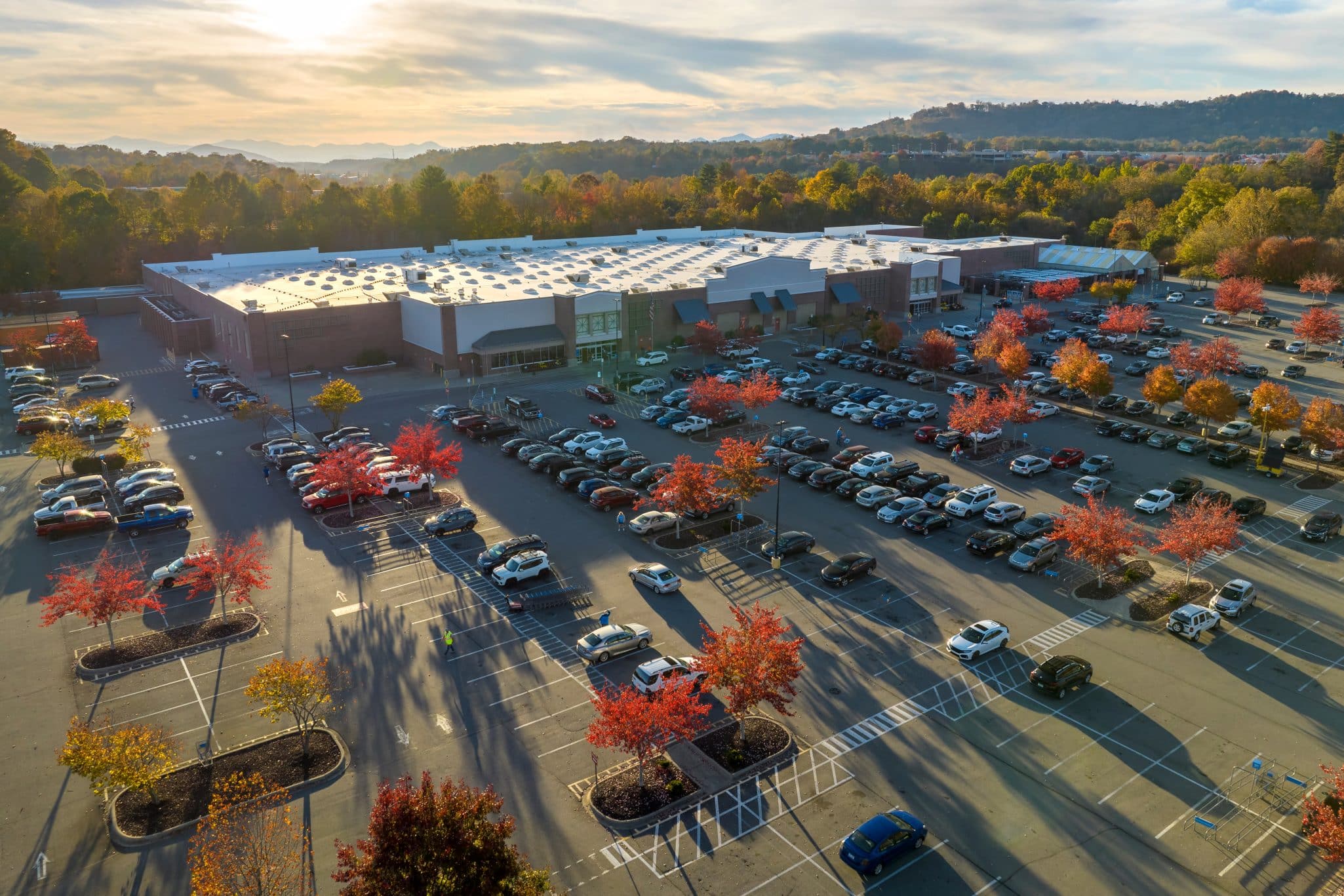
THE WAY AMERICA SHOPS has changed quite a bit over the past 20 years. And, to help support the new shopping habits, there has been an increase in the number of big-box warehouse type stores, supercenters, megastores, and distribution centers.
Big box is a term used for industrial facilities or warehouses that store all sorts of products awaiting distribution throughout the region.
Commercial big-box stores can be broken down into two basic categories: general merchandise such as Walmart, Target, and Costco and specialty retailers such as Home Depot, IKEA, and Best Buy.

Big-Box Store & Warehouses
The common denominator between the two categories is that the buildings are very large. A big-box warehouse has a minimum size of 200,000 square feet to 650,000 to 750,000 square feet. Fulfillment centers range in a size from 600,000 square feet to more than 1,000,000 square feet and most employ more than 1,000 employees in those facilities.
They are large in terms of quantity as well. In 2023, the big-box building inventory amounted to approximately 2.9 trillion square feet in the United States. In 2023, there were more than 6,000 big box buildings in the United States. Warehouse distribution centers have grown in numbers every year since 2013; in 2023 alone, 1,827 were constructed.

Near Misses
Big Box Fires
Firefighters may find themselves driving by these buildings without even giving them a second thought. They take comfort in the fact that the buildings seem to be well built. It’s easy to be complacent because the buildings may be relatively new and conform to all the latest building codes. Most have sprinkler systems, standpipes, and other modern fire safety systems in place, so you may think there is just no way that they can burn.
But they have burned, and there have been plenty of serious fires along with many near misses that firefighters everywhere need to be aware of and take note of the important lessons learned.
Fires and Near Misses
-
Preplanning
Fire departments charged with protecting these structures must recognize that they present many serious challenges. You need to have a seat at the table to ensure the fire department needs are addressed. Preplanning is not often at the top of the chief’s “to-do” list, and that can be understandable with everything department leaders are responsible for. But it is imperative that the preplans are put in place ahead of time, before the call comes in.
Proper preplanning prevents poor performance and can make the difference between success and failure. Even if your department has a robust preplan program in place, these facilities can prove problematic to train in or even conduct a walk-through in. Management must understand that a plan needs to be worked out that allows departments time on site to not just conduct a walk-through but to train there as well.
Management and contractors need to understand the needs of the first responder agencies. As much as we are going to want fire crews to have a basic understanding of the building layout and operational procedures, building employees must understand the need to relay important directions to the dispatch center as well.
The dispatch center must also be involved in the planning process so dispatchers can update their computer system with important notes and be trained to ask the right questions when calls come in from a big-box complex.
Neighboring Fire Departments
The planning needs to also include neighboring departments because chances are they will be responding to any serious emergency involving these structures. The planning must include someone in the facility in charge of employee safety. This person should also be assigned as the communications director to immediately report to a predetermined location to inform the incident commander (IC) of the situation. The IC will also need information about the fire safety system in the building. What types of standpipe, sprinkler, communications, and air systems are in the building to support the firefight?
Always Operating
Most of these buildings are operational 24 hours a day, 7 days a week. We must be proactive, or we will allow a certificate of occupancy to be issued without getting much needed guarantees that we can drill in the building on a regular basis. Most of these big-box complexes are always operating and may not want to allow fire departments access for training because it doesn’t fit in with management’s schedules for the facility. If the facility shuts down on July 4 or on Christmas, that may not be the best time for a volunteer fire department to assemble members for a training drill. It’s best to work out agreements ahead of time and in writing to accommodate fire department training drills.
Municipal Participation
The critical conversation is about how you are going to handle any type of fire in these facilities. Some municipalities have chosen to hide their head in the sand and not get involved. This is a huge mistake because you lose all your bargaining power after the certificate of occupancy is issued to the facility. Staffing expectations and mutual-aid agreements need to be factored into the conversation. Playing catchup is never a good fireground strategy.
Geographical Considerations
It’s important to note that this topic and these challenges do not just apply to big city fire departments, as these structures are in just about every geographic area. Even in rural America, large retailers and manufacturers are building an increasing number of big-box buildings. Land can be less expensive, and highway and interstate access can be more convenient than in a city, so distribution centers, warehouses, and industrial spaces continue to absorb land. In many of these settings, that land is protected by volunteer or smaller fire departments. The local municipality is also looking for employment for citizens, income generated by construction, and the tax revenue these businesses create. This is a serious topic that is equally important to all firefighters everywhere.
Emergency Plans
These meetings are also a great time to discuss emergency action plans and recommend that someone needs to be on duty, on all shifts, to ensure the safety of employees. A system must be put in place that allows for effective communication throughout the building and even to the 911 center in case of emergencies. There may be restrictions placed on employees regarding cell phone use, and perhaps they are not even allowed to have cell phones while working. If that’s the case, there needs to be a designated person located in strategic areas, on all shifts, who can call 911 for help and get the word out regarding an emergency and what actions need to be taken
Emergency Preparedness
It’s important to remember that proper planning and preparation are not limited to fire incidents. Consider the risk of snowstorms, tornadoes, floods, power failures, and even civil unrest and the impact on the big-box facility and, by extension, the nearby fire department. A hazardous materials incident on the highway nearby can have severe consequences on the facility’s operation if deliveries can’t be made. Many of these complexes are built near major thoroughfares. If they are closed for an extended period, it can have a serious financial impact. Evacuating these complexes can be extremely difficult for first responder agencies already dealing with a hazmat spill or even an impending weather event.

Air Standpipe Technology
Air Standpipe System
The protection of members is essential to all successful operations. Are you allowing them into the building? You must decide how you plan on fighting this fire and how you are going to protect your members. A lot of progressive fire departments are using the method of thirds of an air bottle: one-third for operations, one-third for exit, and one-third for emergencies. Many others are using the half bottle rule: half a bottle in, half a bottle out.
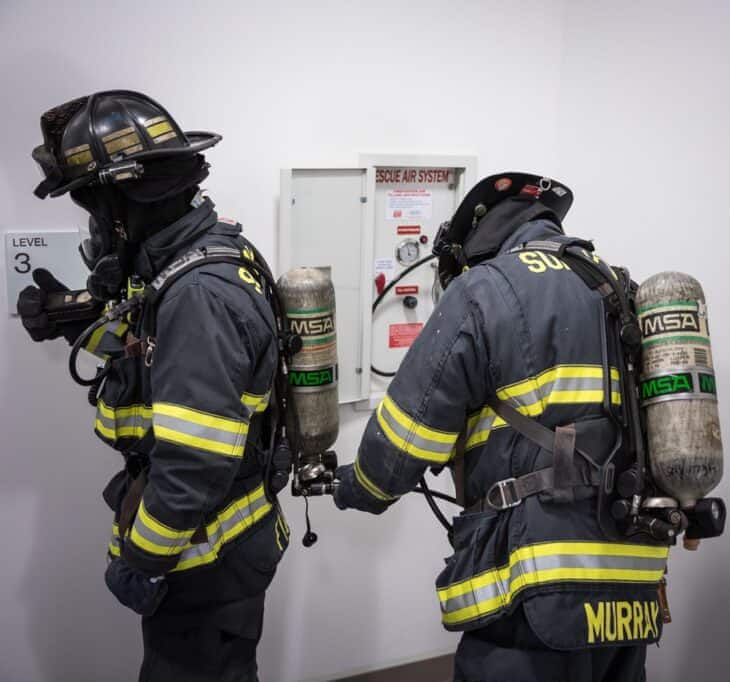
Many departments are also installing Firefighter Air Replenishment Systems (FARS) to provide air refill on the interior of the building. Normally located near standpipe outlets or egress areas, “the air standpipe” allows refill while being under full respiration.
Firefighters can continue operations without having to leave for a refill of their second bottle. This would prevent the loss of critical reflex time for fires that can be fought from the interior.

Authors
TOM MERRILL is a 42-year fire department veteran and commissioner with the Snyder (NY) Fire Department. He served 26 years as a department officer, including 15 years in the chief officer ranks. He was chief of department from 2007-2012. He hosts a regular podcast sponsored by Fire Engineering titled “The Professional Volunteer Fire Department.” He is the author of The Professional Volunteer Fire Department (Fire Engineering Books, 2023). He is a full-time senior fire dispatcher in charge of the Town of Amherst Central Fire Alarm Office.
MICHAEL M. DUGAN is a 27-year veteran of the Fire Department of New York and was the captain of Ladder Company 123 before retiring. As a lieutenant, Dugan served in Ladder Company 42 in the South Bronx. While assigned as a firefighter in Ladder Company 43, Dugan received the James Gordon Bennett Medal in 1992 and the Harry M. Archer Medal in 1993. He is also a former volunteer firefighter in the Halesite (NY) Fire Department. He has been involved with the fire service for more than 40 years. He is an instructor at FDIC and a member of the FDIC and Fire Engineering executive advisory boards. He was awarded the Tom Brennan Lifetime Achievement Award in 2021 at FDIC.