
Three Ways to Increase Work and Air Capacity

Three Ways to Increase Work and Air Capacity Through Functional Fitness
By: Jim Moss and Dan Kerrigan
“Some of us will do our jobs well and some will not, but we will be judged by only one thing: the result.” -Vince Lombard

What Determines Our Work and Air Capacity?
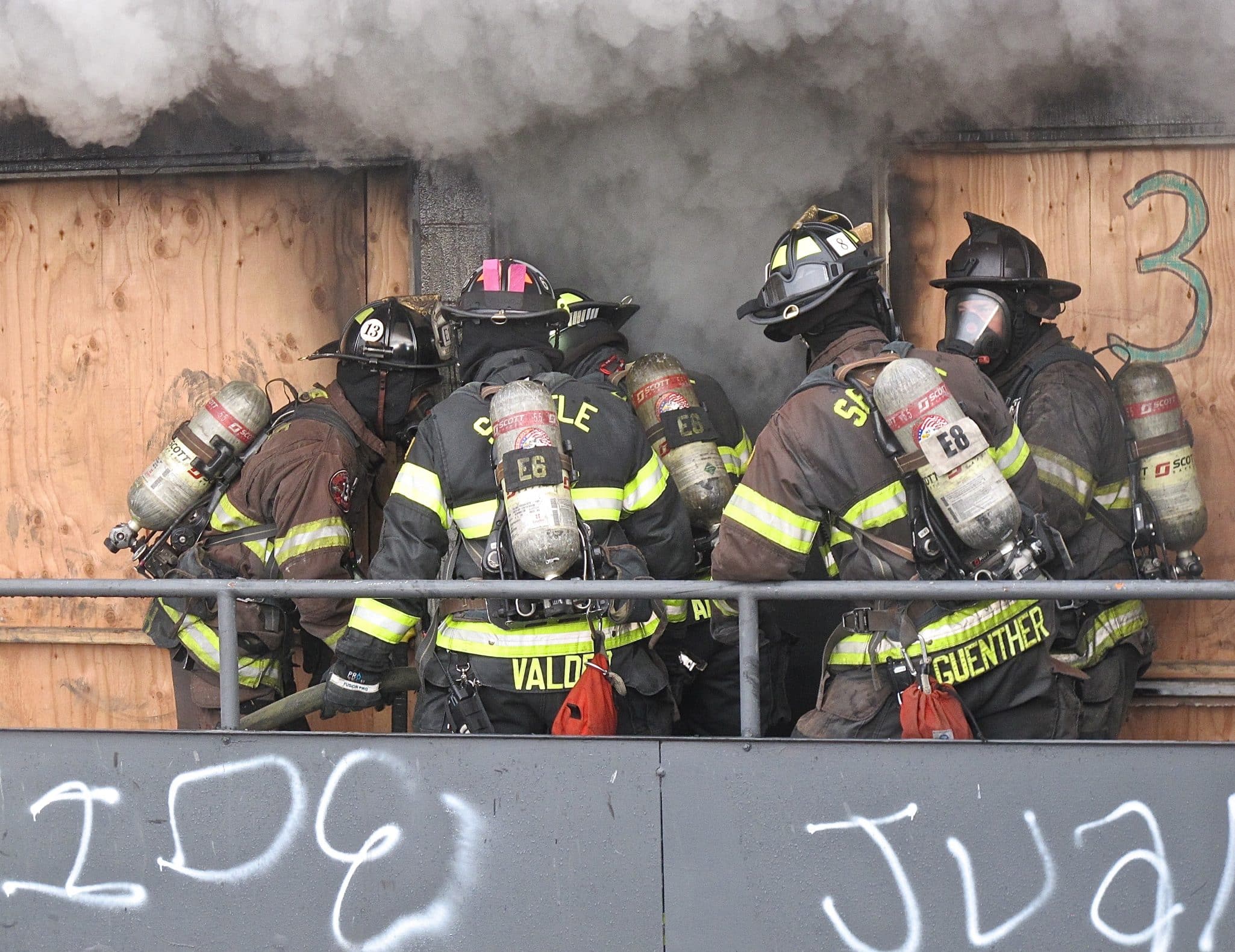
As firefighters, we can have all of the knowledge and skill in the world, but it is ultimately our work capacity and performance that matter most on the fireground. And it is undeniable that our fitness directly impacts our ability to get the job done.
A question we are commonly asked by deconditioned firefighters: “What are the most important areas of fitness I need to focus on to make my SCBA cylinder last longer?” Although we believe that every area of fitness and wellness are important, we teach out-of-shape firefighters to focus on improving two primary categories: cardiovascular capacity and muscular endurance. Improving in these two areas will drastically increase work capacity and air capacity.
As we share in our book *Firefighter Functional Fitness*, cardiovascular capacity is a combination of cardiovascular fitness and aerobic capacity. In simple terms, it is the measure of the body’s effectiveness in transporting oxygen to working muscles and how efficiently these muscles exchange and use this oxygen.
Muscular endurance is the ability of a muscle or group of muscles to exert a moderate amount of force in a very repetitive manner. Firefighters need muscular endurance to perform the marathon of firefighting tasks for the entire duration of a fire. To improve muscular endurance, use moderate weight (or medium-resistance exercises) with more repetitions. More to follow on this topic below.
What Affects Our Work and Air Capacity?
Not many firefighters know that wearing personal protective equipment reduces our maximum physical performance by 25 percent and increases metabolic expenditure by 50 percent.¹ Think about all of the PPE we wear and carry on the fireground: turnout gear, helmet, boot, gloves, SCBA pack and mask, bailout kit, personal tools, portable radios, flashlight, etc. Combine all of these personal items with a set of irons and a water extinguisher and we can easily be carrying an additional 125 pounds! No wonder we need optimal cardiovascular capacity and muscular endurance.
¹ Lee, J. Y., Bakri, I., Kim, J. H., Son, S. Y., & Tochihara, Y. 2013. “The impact of firefighter personal protective equipment and treadmill protocol on maximal oxygen uptake.” *Journal of occupational and environmental hygiene.*
But what about wearing our SCBA and breathing from it? How does it affect our work capacity? Although it is hard to believe, when we use our SCBA, our cardiovascular capacity is reduced by 22%, and our power output is simultaneously reduced by 20%.²
Needless to say, when we need the most out of our bodies on the fireground, we are most restricted by the PPE we must wear to operate safely and effectively.
² Evers, Petersen, Jones. 2005. “The Influence of the SCBA on Ventilator Function and Maximal Exercise.” *Canadian Journal of Applied Physiology.*
3 Ways to Improve Work and Air Capacity
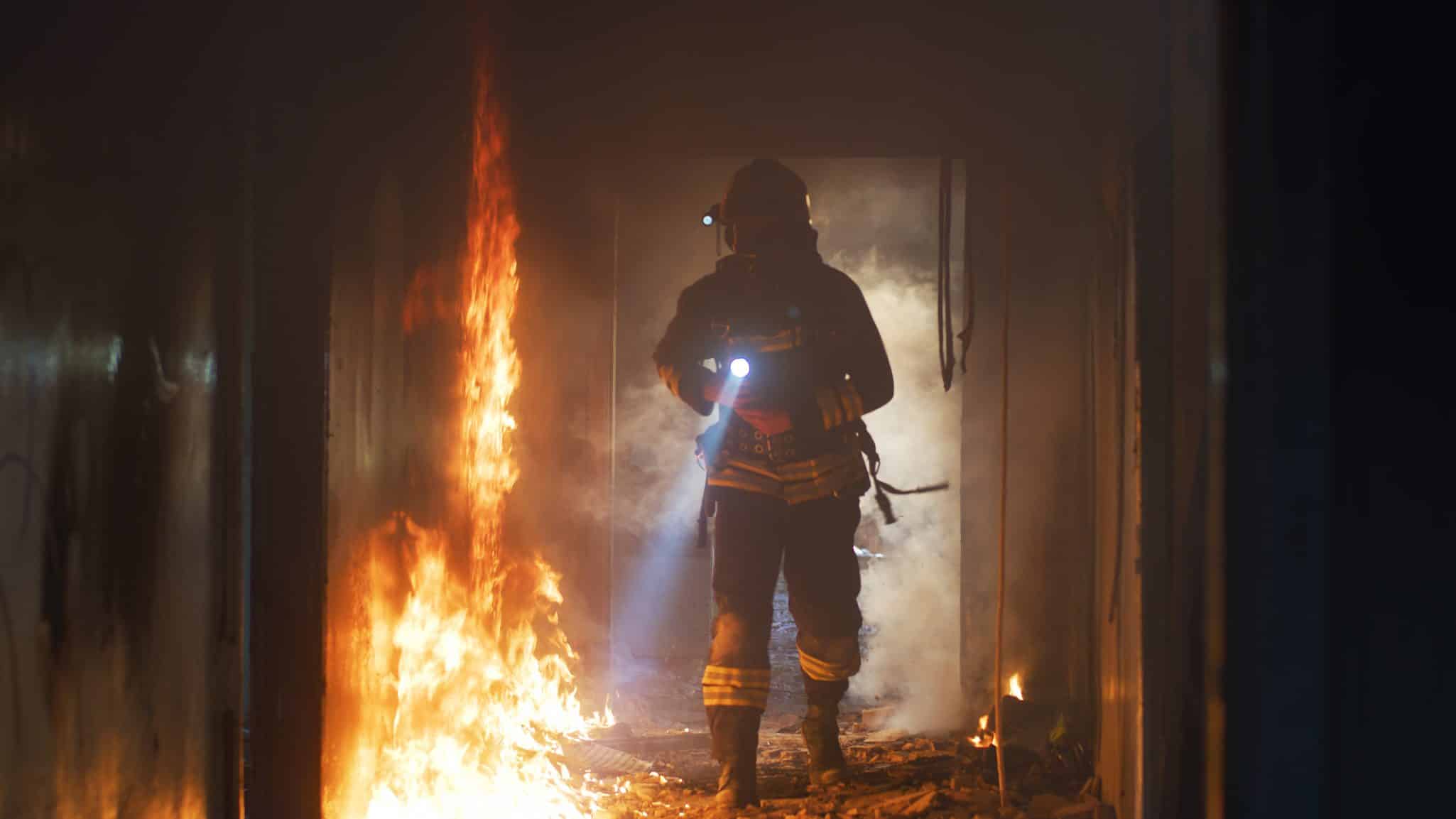
With all of that in mind, let’s discuss three ways to improve our work and air capacity.
1. Cardiovascular Capacity Training
Also known as doing “cardio”, we coach firefighters to use high-intensity interval training (HIIT) to get the most bang for their buck to improve cardiovascular capacity. HIIT alternates brief periods of very intense activity with brief periods of rest. Typically, this is accomplished by working hard for 30 seconds and resting for 30 seconds. We coach firefighters to work at 85-100% of their maximum potential intensity during the work periods.
The total duration of a HIIT workout can be anywhere from 10-30 minutes. If firefighters are deconditioned, we recommend doing shorter work periods with longer rest periods (i.e. 15 seconds of work, 45 seconds of rest). A functionally fit firefighter can increase the work periods and shorten the rest periods (i.e., 45 seconds of work, 15 seconds of rest).
The following is a sample of bodyweight HIIT workout that can be done anywhere, without equipment. We call this HIIT method “30-30-30”: 30 seconds of work, 30 seconds of rest, for 30 total minutes. There are 10 exercises which will be performed sequentially, for a total of 3 rounds each.
- Push-ups
- Jumping Jacks
- Bench Dips
- Air Squats
- Bear Crawls
- Lunges
- Plank Shoulder Taps
- Burpees
- Mountain Climbers
- Sprints
As always, adjust the duration of work and rest periods to your fitness level, as well as the total duration of the HIIT workout.
2. Muscular Endurance Strength Training
Although firefighters definitely need maximal muscular strength and explosive muscular power for the fireground, the majority of firefighting tasks revolve around muscular endurance. Stretching and advancing hose lines, search and rescue, throwing ladders, ventilation, and overhaul are the embodiment of activities that require muscular endurance.
As previously mentioned, muscular endurance training focuses on applying moderate resistance with higher amounts of repetitions. When it comes to specifically doing an exercise, apply 50-70% of your single-rep max for 12-20 repetitions per set, for a total 3-6 sets. For example, if your single-rep max for an exercise was 100 pounds, then you would use 50-70 pounds for 12-20 repetitions per set.
Here is an example of a muscular endurance workout that centers around two essential firefighting movements: Pushing & Pulling. Consider doing 15 reps of each exercise for a total of 5 sets.
- Standing Cable Chest Press
- Seated Rows
- Dips (can be assisted with a resistance band or machine)
- Overhead Pull-downs
- Standing Overhead Press
- Upright Barbell Rows
- Push-ups
- Bent-over Barbell Rows
*If you cannot perform 12 repetitions per set, decrease the resistance/load. If you can do over 20 repetitions per set, increase the resistance/load.*
3. Firefighter Circuits
Firefighter circuits combine the best of both worlds: HIIT + Muscular Endurance Training. By using firefighting equipment we have at each of our stations, we develop more skill, confidence, and muscle memory that directly transfer to the fireground. Undoubtedly, we increase our work capacity by “putting in the work” with our frontline tools and equipment, and we increase our air capacity and efficiency by training with our SCBA.
The great news is that firefighter circuits don’t need to be complicated. Just pick 5-10 simple firefighting tasks that incorporate pushing, pulling, lifting, carrying and dragging. Perform one station for your “high-intensity” work period and then walk to your next station as your “rest” period. If you choose to use a HIIT interval timer, that is perfectly acceptable as well. Perform the firefighter circuit for a total of 20-30 minutes, depending on your level of fitness. Here is a sample firefighter circuit:
- Overhead Sledgehammer Tire Strike (30 strikes)
- Firefighter Crawl (50 feet)
- Ground Ladder Carry and Raise (50 feet)
- Tire/Dummy Drag (50 feet)
- Heavy Rescue Tool or Saw Carry (50 feet)
- Charged Hoseline Advance (50 feet)
When it comes to firefighter circuits, here are some additional considerations:
- Level of PPE – To start at the easiest level of intensity, wear your standard gym clothing (i.e. T-shirt and shorts). To increase in intensity and realism, add varying levels of PPE: Clean turnout coat/pants/boots, firefighting helmet, gloves, and finally your SCBA. *Disclaimer: If you are unsure if your turnout gear contains PFAS (Per- and Polyfluorinated Substances), do not wear it during firefighter circuits.*
- Breathing From SCBA – Get the most realism out of your training by donning your mask and breathing from your SCBA. As you go through the circuit, make a conscious effort to slow your breathing down and control it. Try to get the most time out of your SCBA cylinder as possible. Consider doing a weekly benchmark test by doing the same exact firefighter circuit and recording the time it takes to make the vibra-alert activate. Hopefully each week you can increase the time it takes to activate the vibra-alert, denoting that you are increasing work capacity, air capacity, and SCBA duration.
- Breathing through BlastMask – The BlastMask is an air restriction device that connects to your SCBA mask just like your SCBA regulator would. Firefighters experience the same 14.9% VO2 (aerobic capacity) reduction as they would while breathing from an SCBA. However, instead of using the SCBA’s positive pressure from the cylinder, the BlastMask requires a firefighter to use negative pressure by having to draw a breath in through the device–the next level in work and air capacity training. Readers can learn more at BlastMask.com.
Conclusion
We owe it to ourselves, our fellow firefighters, and our citizens to be able to perform at the highest level on the fireground. To do so, our training must center on improving our work capacity and air capacity. The three primary areas to utilize are cardiovascular capacity training, muscular endurance training, and firefighter circuits.
AUTHOR BIOS:
Chief (Ret) Dan Kerrigan & Captain Jim Moss are the authors of the best-selling book <em>Firefighter Functional Fitness</em>. It is the essential guide to optimal firefighter performance and longevity. With nearly 50 years of combined firefighting experience, they frequently present nationally and internationally on the topic of firefighter health and fitness at venues including FDIC, ISFSI, NVFC, FRI, and FireFit UK as well as providing fitness and health workshops to fire departments across the country. Kerrigan and Moss provide all firefighters with the knowledge, tools, and mindset to maximize their fire ground performance, reduce their risk of injury and line-of-duty death, and have long, healthy careers and retirements. Learn more about their book and workshops at FirefighterFunctionalFitness.com.
