
Fire in the Sky 2026: The Nation’s Most Decorated High-Rise & Big-Box Firefighting Instructors Converge in Colorado Springs
March 14, 2026
“Air is everything. Without it, search and rescue stops. Extinguishment stops. Overhaul stops. Salvage stops. Everything we do in the interior attack depends on breathable air reaching our firefighters.” — Mike Gagliano, President, Firefighter Air Coalition
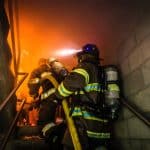
The air will run low. The building will not.
This is not a hypothetical. This is the defining crisis of modern American firefighting. And Fire in the Sky 2026 — taking place March 17–19 at Hotel Polaris in Colorado Springs, Colorado — exists for one reason: to put your department’s firefighters and officers in the same room as the men who have lived this reality for a combined hundreds of years across the most demanding fire departments in the world, and to send them home with the knowledge, tactics, and updated SOG/SOP frameworks that could save their lives and the lives of those they are sworn to protect.
THE CLOCK IS TICKING. LITERALLY.
The physics are unforgiving and non-negotiable.

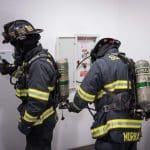
Firefighter Air Coalition demonstration at the Nashville, TN Fire Department training facility
A firefighter ascending 20 floors in full turnout gear and SCBA burns through their air supply before the fire attack has even begun. In a million-square-foot distribution center, the distance from entry to the seat of the fire can exceed a quarter mile — an impossible distance to cover, operate effectively, and safely exit on a single bottle of air. In a mid-rise apartment complex at 3 a.m., with residents sleeping behind closed doors on floors 8, 12, and 15, every second of air is a second of search capability — and when it’s gone, the search stops.
No amount of courage fills an empty bottle.
Skyscrapers and ground-scrapers — the towering residential towers and sprawling big-box structures that define 21st-century American construction — are outpacing the air supply systems we issue to the men and women sent inside them. Fire departments across the nation are writing SOGs and SOPs based on operational tactics, but without confronting the foundational truth: tactics conserve air. Only infrastructure creates it.
Fire in the Sky 2026 addresses both — and the instructors assembled to deliver that message represent the most formidable faculty ever gathered for a single firefighting conference.
THE INSTRUCTORS: YEARS OF EXPERIENCE. ONE STAGE. THREE DAYS.
This is not a conference of academics. These are operators — firefighters and officers who have commanded interior attacks in America’s most fire-demanding cities, who have written the doctrine that departments across the country follow, and who have spent their careers asking the hard questions that save firefighter lives. What they bring to Colorado Springs is not theory. It is hard-won, battle-tested, experiential wisdom measured in thousands of hours on the job.
MIKE GAGLIANO | Seattle Fire Department (Ret.) | 33+ Years | President, Firefighter Air Coalition Session: “Fire in the Sky – And Now You’re Out of Air”
Mike Gagliano has spent more than three decades as a firefighter, crash-rescue specialist, and Air Force veteran — and has dedicated the latter portion of his career to the singular mission of solving America’s firefighter air crisis. As co-author of the landmark book Air Management for the Fire Service and a faculty member at the Fire Department Instructor Conference (FDIC), Gagliano is one of the most recognized voices in the modern fire service. He has taught fireground tactics, decision-making, and air management to departments nationwide. As President of the Firefighter Air Coalition, he has made it his life’s mission to ensure that no firefighter runs out of air because their community didn’t provide the infrastructure to prevent it. His session will force every attendee to confront the moment they dread most — and give them the framework to survive it.
CAPTAIN MIKE DUGAN | Fire Department of New York City (Ret.) | 45-Year Fire Service Veteran | 27 Years FDNY Session: “Fire in the Sky – And Now You’re Out of Air”
Captain Mike Dugan retired from FDNY Ladder 123 having earned the department’s highest awards for bravery — the James Gordon Bennett Medal and the Harry M. Archer Medal — during his time as a firefighter in Ladder Company 43. In 45 years of fire service, Dugan has seen what high-rise operations look like when departments are prepared, and what they look like when they are not. He developed training programs taught to all FDNY members, serves as a contributing editor at Fire Engineering magazine, and was awarded the prestigious Tommy Brennan Lifetime Achievement Award in 2021. He is one of the foremost experts on truck company operations and building construction’s impact on firefighter safety in the country. Co-hosting Fire in the Sky 2026 alongside Gagliano, Dugan will deliver a message rooted in decades of New York City fireground reality: air is not optional, and tactics alone cannot substitute for infrastructure.
DAVE McGRAIL | Denver Fire Department (Ret.) Sessions: “High-Rise Operations: Mindset Not Myths” | “Standpipe Operations: Over Analysis = Paralysis”
With a career forged in Denver’s high-rise landscape, McGrail brings one of the most direct and operationally grounded perspectives on standpipe firefighting available anywhere in the country. His dual sessions tackle the two most dangerous things a high-rise firefighter can carry into a building: bad assumptions and analysis paralysis. McGrail’s approach is built on clarity, decisiveness, and the kind of standpipe expertise that comes only from years of real deployment.
CAPTAIN JIMMY DAVIS | Chicago Fire Department Session: “Protecting Vertical Cities: The First 5 Minutes”
Chicago burns vertically. Captain Jimmy Davis knows what the first five minutes of a high-rise fire look like when everything goes right — and what they look like when it doesn’t. His session zeroes in on the critical opening window of a high-rise incident, the decisions made in those minutes that determine whether the operation is controlled or catastrophic, and the air management strategies that keep options open when time compresses and stakes rise.
CAPTAIN CLARK LAMPING | Clark County Fire Department (Las Vegas Metro) Session: “Big Box Fires = Big Problems”
Las Vegas is a city of massive structures — casinos, distribution centers, and entertainment complexes that span city blocks. Captain Clark Lamping has operated in and around these environments throughout his career, developing expertise in the unique tactical, logistical, and air management challenges that big-box structures present. His session is essential for any department that has a warehouse, a shopping center, or a distribution hub in its response area — which, in modern America, means nearly every department in the nation.
BATTALION CHIEF CHRIS SLEIGHER | Mesa Fire Department (Ret.) Session: “Mid-Rise Mindset: Making Elevated Decisions”
Mid-rise structures occupy a dangerous gray zone in firefighting doctrine — too tall for ground-level operations, not tall enough to trigger high-rise protocols in many jurisdictions. Battalion Chief Chris Sleigher has spent his career operating in exactly this space, developing the tactical mindset required to make sound decisions in buildings that don’t fit neatly into any single playbook. His session provides the mental framework your officers need before they face a mid-rise fire for the first time without it.
BRENT BROOKS | Toronto Fire Services Session: “High-Rise Firefighting 2.0: Lithium-Ion and Modernizing High-Rise Firefighting”
The high-rise fire threat has evolved. Lithium-ion batteries — in electric vehicles parked in building garages, in e-bikes stored in residential units, in energy storage systems integrated into building infrastructure — are rewriting the risk profile of every tall building in North America. Brent Brooks brings an internationally informed perspective from one of North America’s largest urban fire departments, addressing how departments must modernize their high-rise SOGs and SOPs to account for a fire threat that burns hotter, longer, and more unpredictably than any previous generation of firefighters has faced.
CHIEF KRIS BLUME | Meridian Fire Department Session: “Bringing the Firefight to Mid/High-Rise Buildings Under Construction”
Construction sites are among the most dangerous, and least discussed, high-rise firefighting scenarios. Chief Kris Blume’s session fills a critical gap in most department’s training libraries — addressing the unique hazards, access challenges, and air management demands of fighting fire in buildings that aren’t finished yet. As high-rise construction booms across American cities, this session is immediately relevant to departments in virtually every growing metropolitan area.
CAPTAIN JAY BONNIFIELD | Everett Fire Department Session: “Anatomy of a Stretch”
Hose stretches in high-rise and large-structure fires are among the most physically demanding and technically complex evolutions in the fire service. Captain Jay Bonnifield breaks down the stretch with surgical precision — the planning, the execution, the air consumption realities, and the operational adjustments that determine whether your crews arrive at the fire floor ready to work or already depleted. This session will reshape how your department trains for and executes high-rise hose operations.
DANIEL DeYEAR | Dallas Fire-Rescue Department (Ret.) | 43+ Years of Fire Service | Deputy Chief Session: “Big Box Fires – Thinking Outside the Bigger Box”
Daniel DeYear’s career spans the Bronx to Carrollton to more than 30 years with Dallas Fire-Rescue, where he retired as Deputy Fire Chief. His credentials include Master Level Certifications as a Firefighter, Fire Inspector, Instructor, Fire Investigator, Fire Officer IV, Hazardous Materials Technician, Incident Safety Officer, and Incident Commander — and more than 20 years as a licensed Paramedic. He has served as an International Fire Marshal for the U.S. Department of State, providing fire and life safety for American embassies and consulates in over 35 countries. Named the Texas Association of Fire Educators 2020 Instructor of the Year, DeYear’s big-box session is a masterclass in thinking beyond conventional tactics when the structure itself defies conventional assumptions. His message to municipal leaders is unambiguous: “If you’re approving million-square-foot warehouses, you need to understand what you’re asking your firefighters to defend. The air standpipe system is not just a firefighter’s tool — it becomes their lifeline.”
LIEUTENANT MIKE CIAMPO | Fire Department of New York City (Ret.) Session: “Truck Company Operations at Large Structure Fires”
Lieutenant Mike Ciampo brings FDNY truck company doctrine to the large-structure environment — translating the lessons learned in New York City’s most complex fire operations into actionable strategies for departments operating in high-rises, big-box stores, and sprawling warehouse complexes. His session addresses the search, ventilation, forcible entry, and rescue challenges that define truck company work in large structures, with a clear-eyed focus on how air supply limitations shape every tactical decision.
A VENUE UNLIKE ANY OTHER: WHERE DOCTRINE MEETS DEMONSTRATION
Hotel Polaris is not just a backdrop. It is the curriculum.
As Colorado’s first hotel equipped with a fully installed air standpipe system, Hotel Polaris is a living laboratory for the future of firefighter life-safety infrastructure. Conference attendees will walk the stairwells, examine the connection points, and gain hands-on understanding of a system that transforms a 30-minute air supply into sustained operational capability — the engineering solution that makes interior attack viable in buildings that would otherwise be logistically impossible to defend.
This is not classroom instruction. This is the difference between reading about how something works and putting your hands on it.
EVENT DETAILS
Event: Fire in the Sky 2026
Dates: March 17–19, 2026
Location: Hotel Polaris | Colorado Springs, Colorado
Special Feature: Exclusive guided tours of Colorado’s first hotel-installed air standpipe system