
Equipment Deployment Plan
Establish an effective and efficient plan for deploying equipment during high-rise firefighting operations to minimize firefighter fatigue and maximize operational efficiency.


Establish the Plan
Equipment in Stairwell Ascends
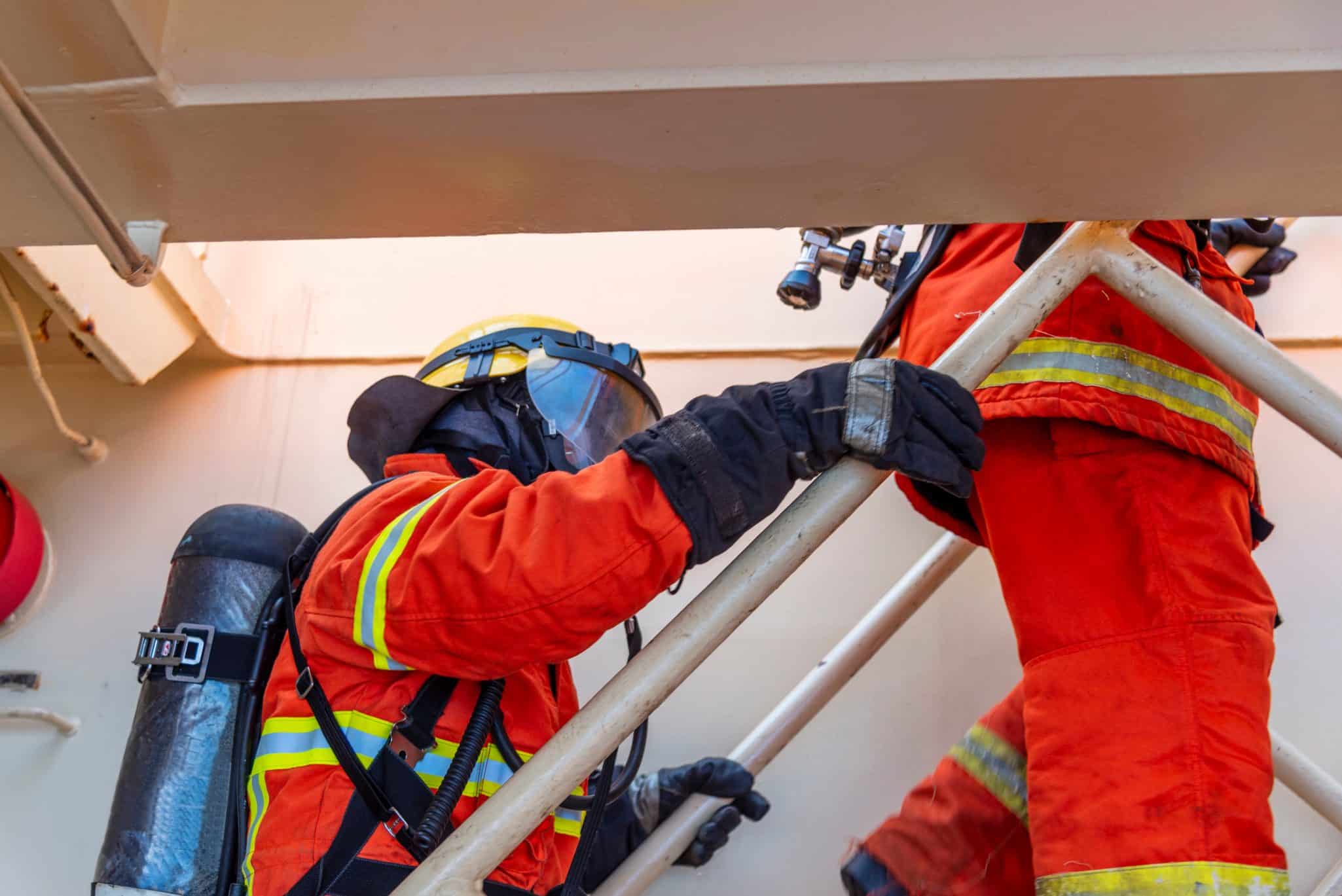
Ascending stairs during a fire scenario presents significant challenges for firefighters, requiring both physical endurance and strategic decision-making. The weight of their equipment, which can exceed 75 pounds, is a major factor that impacts their ability to move quickly and safely. This excessive load not only slows their ascent but also increases fatigue, reducing their overall operational efficiency and potentially compromising their effectiveness in critical situations.
Even well-conditioned firefighters face the strain of carrying unnecessary equipment, particularly in low-response scenarios where personnel are limited, and resources are stretched thin. This added weight can lead to quicker exhaustion, making it harder to perform essential tasks such as fire suppression, search and rescue, or victim evacuation.
Proper equipment deployment is crucial in high-rise incidents, where the need for mobility and efficiency is paramount. Firefighters must carefully assess what equipment is necessary for the specific scenario to avoid overburdening themselves. Streamlining the gear they carry allows them to maintain active firefighting capabilities, ensuring they can respond effectively to the demands of the situation.
In summary, while the challenges of climbing stairs under heavy loads are substantial, taking the necessary steps to manage equipment weight and deployment is essential for firefighter safety and operational success.
Plan for Challenges and Obstacles
Unrealistic Climbing Load
One of the primary stressors is the excessive weight of their equipment, which can lead to operational delays in stairwells. This weight not only slows their movement but also increases the physical strain on their bodies, making it harder to maintain a steady pace.
The added weight can also contribute to thermal strain, as firefighters are often working in high-temperature environments where heat stress is a constant threat. This combination of physical and thermal stress can quickly lead to fatigue, reducing their ability to perform critical tasks such as fire suppression, search and rescue, and victim evacuation.
Moreover, the strain of carrying heavy loads can affect their balance and coordination, increasing the risk of slips, trips, and falls, especially in confined spaces like stairwells. This can further delay their progress and put them at greater risk of injury.
To mitigate these challenges, it is essential to establish realistic expectations for equipment loads. Firefighters need to carry only what is necessary for the specific scenario, ensuring they can reach the fire floor efficiently with minimal fatigue. By managing equipment weight and distribution, firefighters can maintain their operational effectiveness and reduce the risk of physical exhaustion, allowing them to perform their duties safely and effectively in the demanding conditions of a fire scenario.

Methods and Strategies
Equipment Deployment and Training
To create a comprehensive plan for addressing the physical challenges firefighters face during high-rise fire scenarios, it is essential to focus on realistic equipment deployment, efficient load distribution, and alternative transport solutions. Here’s an expanded and elaborated approach:
1. Realistic Equipment Deployment
Develop Comprehensive Guidelines: Establish clear, realistic guidelines for the expected equipment load per firefighter. These guidelines should be based on the specific needs of the fire scenario, ensuring that firefighters carry only what is essential for their tasks. This will help prevent overloading and reduce the risk of fatigue and operational delays.
Optimize Load Distribution: Carefully distribute the weight of equipment among team members to ensure that no single firefighter is overburdened. This can be achieved by assigning specific tools and equipment to different team members based on their roles and responsibilities. The goal is to minimize the weight each individual carries while ensuring that all necessary tools are available on the fire floor.
Conduct Simulations and Drills: Regularly conduct simulations and drills to test and refine equipment load configurations. These exercises will help identify the most efficient load distributions and ensure that firefighters are prepared to handle the physical demands of high-rise firefighting scenarios.
2. Bottle Loading Method
Implement a Bottle Loading Strategy: Develop a strategy for loading hose bundles that evenly distributes weight among team members. This method involves assigning each firefighter to carry only one hose bundle, preventing overloading and ensuring that the physical strain is shared across the team.
Investigate Lightweight Materials: Explore the use of lightweight materials for hose bundles to reduce the overall weight that firefighters need to carry. Lighter materials can significantly decrease the physical strain on firefighters, allowing them to move more quickly and efficiently.
Conduct Trials: Test the effectiveness and efficiency of the bottle loading method in various high-rise scenarios. These trials will provide valuable data on how well the method works in real-world conditions and help refine the approach for future use.
3. Alternative Equipment Transport Solutions
Explore Mechanical Aids: Investigate the use of mechanical aids, such as equipment lifts or pulley systems, to transport heavier loads. These aids can significantly reduce the physical strain on firefighters, allowing them to focus on their tasks without being weighed down by excessive equipment.
Evaluate Drone and Automated Systems: Assess the feasibility of deploying drones or automated systems to deliver vital equipment to upper floors in a timely manner. These technologies can provide a quick and efficient way to transport essential tools and supplies, reducing the need for firefighters to carry heavy loads up multiple flights of stairs.
Prioritize firefighter safety and operational efficiency in all methods and strategies.
Regularly update and refine deployment strategies based on real-world feedback and evolving firefighting technologies.
Ensure all equipment and methods comply with safety regulations and best practices.
Training and Implementation
Schedule and conduct regular training sessions to familiarize firefighters with new deployment methods and equipment.
Develop a feedback loop with frontline firefighters to gather insights and suggestions for further improvements.
Create detailed training manuals and instructional videos to support continuous learning and skill enhancement.
Evaluation and Adjustment
Monitor the effectiveness of the new deployment strategies during actual operations and training exercises.
Collect data on firefighter performance, fatigue levels, and operational success rates post-implementation.
Adjust plans and strategies as necessary, incorporating new technologies and techniques to enhance performance and safety.
Read the Full Article: High-Rise Firefighting Challenges and Strategies, by Jimmy Davis, Fire Engineering FDIC Supplement 2025 authored by the Firefighter Air Coalition
Resources
High-Rise Essentials: The First Five, Fire Engineering (Jimmy Davis)
High-Rise Essentials, Fire Engineering Webcast, (Jimmy Davis)
SCBA Air Management for Tall Buildings and Vertical Challenges, Fire Engineering (Gerald Tracy and Jack Murphy)