
Energy Driven Fires in High-Rise Buildings, Part 1
July 7, 2026
Energy driven fires in high-rise and large-scale buildings are one of the most under-trained threats in the fire service. When a building’s own electrical infrastructure becomes the fuel, the standard structural firefighting playbook fails — and the clues that could save a crew are often missed in the first five minutes on scene.
Energy Driven Fires: The Training Gap in the Fire Service
The fire service has invested heavily in structural firefighting, hazmat response, technical rescue, and EMS. Energy hazard response — the ability to recognize, assess, and safely operate around a building’s electrical infrastructure during an emergency — has received almost nothing by comparison.
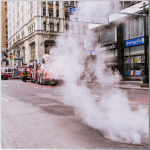
This is not because the threat is small. It is because the threat does not announce itself with flames showing on arrival. An energy fire in a large building often presents as something far more routine: a persistent alarm, an odd smell, haze in a stairwell. The cues are subtle. The consequences of missing them are not.
Greene’s central argument is that energy hazard knowledge must live at the company officer level, not inside a specialty unit that might be twenty minutes away. The first-arriving engine is the unit that will make the critical decisions — enter or hold, investigate or withdraw, flow water or wait for the utility. If that officer cannot read the energy indicators on scene, no amount of downstream expertise can undo what happens in those first minutes. The gap is not in equipment. It is in baseline training.
The No-Entry Rule for Vaults and Electrical Manholes
Every large building draws power through a chain of electrical spaces. At the front of that chain sit vaults and electrical manholes — the points where high-voltage utility power enters the structure. Vaults contain transformers. Manholes serve as connection nodes along the underground energy pathway. Both sit out of sight, often beneath sidewalks or in locked basement rooms, and both contain energy levels that no amount of turnout gear can protect against.
The tactical rule for these spaces is absolute, and Greene does not soften it: do not enter a utility vault. Do not open the door to take a look. Do not send a crew in with a hoseline. The energy inside these spaces is lethal on contact, and the only safe response is defensive — isolate, evacuate the surrounding area, and wait for the utility provider to confirm that the equipment is fully deenergized.
This is not the fire service’s natural instinct. Crews are conditioned to go in. They are conditioned to solve the problem with water and aggression. Energy fires punish both of those instincts without hesitation. Recognizing when to override them is a skill that must be taught, practiced, and reinforced long before the tones drop.
Voltage, Amperage, and Arc Flash in Switchgear Rooms
Downstream from the vault, power flows into a switchgear room. This is where the building’s electrical supply is protected, controlled, and distributed. Every amp that powers the elevators, the fire pump, the HVAC, and the lights passes through this room.
Here is where language becomes a hazard in itself. Switchgear rooms are rarely labeled “High Voltage,” because the voltage inside generally falls below the 600-volt threshold that defines that term. They may not even be labeled “Electrical.” To the building’s engineering staff and to the utility, “Switchgear” is a term of art that signals exactly what is inside — low voltage, extreme amperage, and lethal arc-flash potential. To a firefighter who has never learned this vocabulary, the sign on the door says nothing useful.
That gap in translation can kill. An arc flash inside a switchgear room produces temperatures that exceed the surface of the sun for a split second, followed by a pressure wave that can throw a firefighter across the room. Structural firefighting gear provides incidental protection at best. The only reliable safety measure is distance — staying out of the room until the affected cabinet has been isolated and confirmed deenergized.
There is one critical exception to the no-entry rule for switchgear rooms. Unlike utility vaults, which are inaccessible to building staff, switchgear rooms are controlled by the building’s engineers. That means someone could be inside. Greene’s protocol is direct: ask the building engineer immediately whether anyone is in that room. If the answer is no, the door stays closed. If the answer is yes, the risk calculus shifts — but it shifts with full awareness of what that entry will expose the crew to.
Reading the Fire Alarm Panel for Energy Driven Fires
The fire alarm panel is the most underutilized intelligence asset on any high-rise call. Greene devotes significant attention to teaching firefighters how to read it not just for smoke and heat detection, but for energy status.
The core principle is counterintuitive: in a typical structure fire, the building does not lose power. If you arrive at an alarm and the building’s power is out — even partially — something fundamental has changed. The fire is not just in the building. The fire involves the building’s energy supply.
Two signals on the panel confirm this. The AC Power LED will be off. The display will show a message like “AC Power Loss,” “Phase Loss,” or “AC Power Trouble.” The exact wording varies by manufacturer, but the meaning is consistent: primary utility power to the building has been interrupted. A secondary confirmation comes from the egress lighting. If the backup lights in the stairwells and hallways are illuminated during normal daytime hours, the building has switched to emergency power — another sign that the primary feed is down.
When these three data points converge — power loss on the panel, egress lights glowing, smoke from below grade — the incident is no longer a routine alarm investigation. It is an energy fire. The building’s own electrical infrastructure is burning somewhere in the basement or subgrade. The tactical posture must change from investigation to defensive containment until the utility can isolate the source. That shift, from offensive to patient, is only possible if someone on scene knows to make it.
What Comes Next: Battery Storage, Solar, and Distributed Energy
The article covers more ground — UPS battery rooms, backup generators, photovoltaic arrays on rooftops and façades, and the sprawl of lithium-ion battery storage throughout modern buildings. Those topics will form Part 2 of this overview, along with tactical considerations for emerging distributed energy resources.
But the throughline of Greene’s work is already clear in the first half. The American fire service is staffed by traditionally resourced companies — engine crews, ladder crews, the men and women who arrive first with the tools they carry. Those companies are not the problem. The problem is that they have not been given the baseline energy hazard training that their operational environment now demands.
The good news is that this knowledge is accessible. It does not require new apparatus, new equipment, or a specialized unit. It requires teaching company officers to recognize energy spaces for what they are, to read the alarm panel for the energy story it is telling, and to override the instinct to push in when the building itself has become the fuel.
The training gap Greene describes is real. But gaps can be filled. That work begins with the first-due company, the first five minutes, and the first officer who knows what they are looking at.
Read the full article: Energy Hazard Fire Considerations for High-Rise and Large-Scale Buildings — Chris G. Greene, Fire Engineering, Firefighter Air Supplement, 2026.
The Fire in the Sky supplement is published annually by the Firefighter Air Coalition in partnership with Fire Engineering. The 2026 edition is available at aircoalition.org.
Read more from this series:
The Hose Stretch: Mid-Rise Apartment Fire Tactics