
Firefighter Air Consumption: SCBA Limits and Fireground Management
August 6, 2026
Firefighter air consumption determines how quickly a firefighter uses the air in an SCBA cylinder during interior operations. Workload, heat stress, PPE, fitness, and psychological stress all affect breathing demand, while the cylinder carries a fixed air supply. Understanding SCBA limits helps fireground leaders plan work cycles, respond to low-air alarms, and protect crews before the air supply or human capacity becomes critical.
Firefighting combines muscular work, thermal stress, environmental danger, and equipment weight. Turnout gear traps heat, restricts movement, and increases the oxygen cost of movement. Higher cardiovascular fitness, thermotolerance, and movement efficiency can extend useful work from the same cylinder.
An Illinois Fire Service Institute study examined firefighters working in full PPE inside a 116°F chamber. The work included stair climbing, hose advancement, search, and overhaul. Firefighters worked for two minutes followed by two minutes of rest, and one work bout lasted approximately 14 minutes.
The study found that:
- Heart rate reached approximately 180 to 185 beats per minute.
- Core temperature increased by more than 1°F.
- Stair climbing peaked at approximately 8.1 METs.
- Hose advancement and search reached approximately 6.7 to 7.2 METs.
- Overhaul reached approximately 5.5 METs.
- Average peak minute ventilation reached approximately 79 liters per minute.
SCBA Cylinder Limits and Firefighter Air Consumption
A standard 30-minute SCBA cylinder contains approximately 1,275 liters of air. At a peak ventilation rate of 79 liters per minute, the full cylinder could be depleted in approximately 14 to 17 minutes.
With the low-air alarm typically leaving about one-third of the cylinder as reserve, the alarm could sound after approximately 9 to 11 minutes of active work under peak conditions.
These figures are not a universal countdown. Firefighter air consumption varies according to:
- Assignment type
- Work intensity
- Rest periods
- Heat and environmental conditions
- Psychological stress
- Individual physiology
- Fitness and movement efficiency
Peak air-consumption rates can occur during short, critical periods. Officers should manage work cycles and air conservatively instead of relying only on the nominal duration printed on the cylinder.
Fatigue also continues after interior work. After one approximately 14-minute bout, firefighters showed reduced foot clearance, altered gait, and degraded motor control during an exit obstacle course. Rehabilitation, recovery, hydration, cooling, medical monitoring, and careful reentry decisions are essential.
Why SCBA Air Consumption Varies on the Fireground
The same firefighter may consume air at different rates during different assignments. Stair climbing, hose advancement, forcible entry, victim removal, search, and overhaul each place different demands on the body.
A firefighter working in full PPE may experience:
- Increased breathing demand
- Faster heat accumulation
- Reduced movement efficiency
- Greater cardiovascular strain
- Increased fatigue during repeated tasks
- More difficulty communicating and coordinating movement
The building also changes the air-management problem. Distance to the work area, stair configuration, hose-line movement, debris, visibility, and the route back to safety all affect how much time and air are required.
The cylinder, the firefighter, and the building must be considered together. A gauge can show how much air remains, but it cannot show how much physical capacity remains in the person carrying the cylinder.
What Happens After the First SCBA Cylinder
What happens after a firefighter uses the first SCBA cylinder? The next entry begins with the effects of the first one still present.
Firefighter air management after the first cylinder depends on firefighter air consumption, repeated firefighter bouts, firefighter rehabilitation, and safe reentry decisions. A fresh cylinder restores the air supply, but it does not immediately restore the firefighter’s heat balance, breathing, strength, coordination, or decision-making capacity.
A cylinder exchange replaces used air, not accumulated fatigue.
When a firefighter leaves a structure, the body may still be affected by:
- Elevated heart rate
- Increased core temperature
- Heavy breathing
- Muscle fatigue
- Heat stress
- Reduced coordination
- Cognitive strain
The next assignment therefore begins on top of the first assignment rather than from a clean starting point. This difference matters whenever an incident requires repeated entries or extended operations.
How Repeated Firefighter Bouts Change Air Consumption
A firefighter who returns before recovering may begin the next bout with residual heat, fatigue, and an elevated workload. The same stair climb, hose advance, search pattern, or overhaul task can demand more from the body the second time because the body has not returned to its earlier condition.
Air may be consumed more quickly. Movement may become less efficient. Communication may require more effort at the exact moment when the assignment becomes more complex.
Repeated work changes the starting point for the next decision.
Nominal cylinder duration cannot serve as a universal countdown. Repeated bouts make that warning more important because the firefighter may use the same equipment and enter the same building while having less usable performance than during the first entry.
The operational clock is affected by physiology before the gauge reaches the point that attracts attention. Officers must evaluate the person, the assignment, and the environment together.
What Firefighter Rehabilitation Should Accomplish
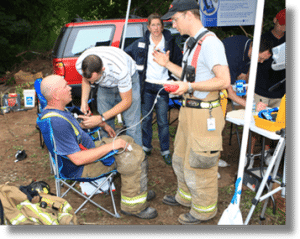
An effective firefighter rehabilitation period gives the firefighter an opportunity to:
- Reduce heat strain
- Replace fluids according to department policy and medical direction
- Report symptoms
- Receive appropriate assessment
- Cool down and recover
- Determine whether another assignment is safe
The purpose is not to make a tired firefighter look ready. The purpose is to determine whether that firefighter can safely work again without turning residual fatigue into a new emergency.
Condition matters alongside the gauge. Confusion, unsteadiness, unusual shortness of breath, overheating, chest discomfort, weakness, poor communication, or degraded coordination should move the decision toward continued rehabilitation and medical evaluation rather than immediate reentry.
A firefighter can have air in the cylinder and still need more time, cooling, assessment, or removal from the assignment.
Company officers and incident commanders must make recovery visible and expected. Crews need a clear place to report, a clear evaluation process, and a clear understanding that requesting rehabilitation is a professional action.
When the Low-Air Alarm Requires Action
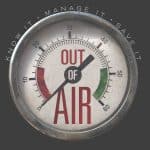
The low-air alarm should be treated as an immediate operational signal, not as a target to reach.
It indicates that the available margin is narrowing. The response should already be understood before the alarm sounds. The crew should communicate, follow the exit plan, maintain accountability, and leave the immediately dangerous to life or health atmosphere before reserve air is consumed.
A timely exit protects the crew and preserves command’s ability to maintain the next work cycle.
How Part 1 Informs Firefighter Air Management
Part 1 provides the physiological context for firefighter air consumption. That context must inform the next operational decision.
Before a crew is committed, officers should understand:
- The assignment
- The expected workload
- The travel distance
- The air-supply plan
- The exit route
- The accountability process
- The rehabilitation capacity available to the incident
During the incident, officers should observe the crew rather than rely on the gauge alone. After the assignment, they should avoid treating a cylinder exchange as proof that a firefighter is ready to return.
The strongest air-management programs connect the body, the bottle, and the building:
- The body determines how quickly air is consumed.
- The bottle limits how much air is available.
- The building determines how difficult it is to reach the work, leave the hazard, and replace the air.
A safe plan accounts for all three.
How to Decide Whether Reentry Is Safe
The decision to reenter should never be automatic. It should follow recovery, communication, accountability, and an honest assessment of the assignment ahead.
If the firefighter is still overheated, unsteady, confused, short of breath, or unable to communicate clearly, the appropriate decision is to continue rehabilitation and obtain medical evaluation according to department policy.
The next cylinder should not become a reason to ignore the condition of the firefighter carrying it.
The mission is not to keep every firefighter working for as long as possible. The mission is to keep firefighters capable of doing the work, recognize when that capability is changing, and build enough time and air into the operation to make the next decision before the emergency makes it for them.
That is the practical connection between physiology, air management, and command judgment.
Practical Firefighter Air Management for Extended Operations
Part 1 showed how quickly the body can be pushed during one bout of interior firefighting. Part 2 shows why the next bout cannot be planned as if nothing happened.
Recovery is part of air management. Rehabilitation is part of the tactical plan. The low-air alarm is a decision point. These practices must be paired with disciplined crew rotation, accountability, and respect for human limits.
Firefighter air consumption is never only about the air inside the cylinder. It is about the firefighter, the assignment, the building, and the time required to get home.
Plan for the next cylinder by planning for the person who will carry it.
Repeated entries make early decisions more important because a delayed exit can send a crew to rehabilitation later, hotter, and less coordinated. That delay can affect the next crew rotation, the availability of relief personnel, and the incident commander’s ability to maintain a safe work cycle.
The Rule of Air Management is not a number on a gauge. It is a way of organizing decisions around time, distance, workload, air supply, and the condition of the people doing the work.
About the authors and original article: This overview article was written by the Firefighter Air Coalition based on the original article, “Physiological Response to Firefighting: Air Consumption and Work Output,” published in the Fire Engineering FDIC Supplement 2024. The original article was written by Richard Kesler, Gavin Horn, and Denise Smith. This overview emphasizes their findings. Read the full article here.
Their work should be used alongside department policies, current medical guidance, and applicable NFPA standards.
Table Of Contents
- Scba Cylinder Limits And Firefighter Air Consumption
- Why Scba Air Consumption Varies On The Fireground
- What Happens After The First Scba Cylinder
- How Repeated Firefighter Bouts Change Air Consumption
- What Firefighter Rehabilitation Should Accomplish
- When The Low-air Alarm Requires Action
- How Part 1 Informs Firefighter Air Management
- How To Decide Whether Reentry Is Safe
- Practical Firefighter Air Management For Extended Operations